
A young man sits at a desk in a white room, writing on a piece of paper.

Burnout Before 30: Mental Health Resources for Early Career Professionals

A young man sits at a desk in a white room, writing on a piece of paper.

Burnout Before 30: Mental Health Resources for Early Career Professionals

Burnout before age 30 is increasingly common among early career professionals due to financial pressure, job insecurity, unclear workplace expectations, and constant digital availability. Unlike short-term stress, early burnout causes persistent emotional exhaustion, disengagement, anxiety, and declining work performance, even when workloads change.

Early intervention matters. Addressing burnout early can reduce the risk of long-term mental health conditions such as anxiety, depression, and substance misuse. Effective support options include employer-sponsored Employee Assistance Programs (EAPs), outpatient therapy (including CBT), campus and alumni career counseling, and community-based mental health organizations.

Practical strategies to manage and prevent burnout include:

  • Setting clear work boundaries and limiting after hours availability
  • Prioritizing sleep, physical activity, and daily self-care routines
  • Seeking professional mental health support before symptoms escalate
  • Building support systems outside of the workplace

Immediate help is available. If you have thoughts of self-harm, confidential crisis support is available 24/7 by calling or texting 988 in the U.S., or by using text-based crisis services.

Burnout is becoming a common experience among working professionals. According to the American Association of Colleges and Universities, over half of working professionals experience symptoms of burnout.

While burnout used to be associated with late stage professionals who were on the verge of retirement, or within high-stress professions such as nursing, it’s changed in recent years. More than ever before, burnout is rising among young people, even those who have just entered the workforce, in nearly every profession. Gen Z, in particular, has received a lot of attention for the prevalence of mental health issues and burnout common in the generation. Over any other generation, Generation Z is the most likely to report poor mental health conditions.

With the rise of burnout and mental health challenges among young professionals, it begs the question: why is it on the rise, and how can we stop it?

What Burnout Looks Like in Early Career Professionals

As opposed to older working professionals, burnout looks different among young adults, to the point that it can make it challenging to identify when navigating a new career. Even if you can identify it, older professionals or managers may shrug off the symptoms, dismissing that it’s just a part of “starting out” or that it’s a rite of passage.

However, unlike burnout that manifests after years of overload, early burnout develops quietly as young adults aim to prove themselves in the workplace. Most commonly, burnout may include symptoms like:

  • Emotional and mental warning signs: Burnout can often look like chronic anxiety, irritability, and emotional numbness. You may also struggle to find joy in any of your passions or hobbies.
  • Physical and behavioral symptoms: Chronic stress can cause physical conditions like constant fatigue, headaches, stomach issues, sleep disruptions, and a lack of appetite.
  • Work-related red flags: Your productivity may not be what it once was, and you may also experience imposter syndrome, the fear that you’re underqualified and one day you’ll be exposed for it. You may also have difficulty setting boundaries because of this fear and focus instead on perfectionism.

If you find yourself experiencing any of these symptoms, you may be developing burnout.

A young woman in a lab coat, looking concerned, sits across from a young man wearing glasses with his head down.

Why Burnout Is Increasing Before Age 30

While anyone can experience burnout, people under 30 are uniquely vulnerable to developing symptoms. According to recent research published by Future Forum that evaluated burnt out professionals, nearly half (48%) were under the age of 30. There isn’t a single reason why young people everywhere are feeling exhausted from their jobs. Instead, there are compounding stressors that can make the everyday work life unbearable for most young people.

The Transition From Academic Structure to Workplace Expectations

More than any other generation, Generation Z and millennials are more educated than ever before. Nearly half (42.8%) have at least a bachelor’s degree. When these graduates step out of the structured academic environment and into the workplace, they face a chaotic set of norms. In school, they obtained success through clear milestones, deadlines, and grading systems. In the workplace, success is often more vague, subjective, and poorly defined.

This abrupt change can cause feelings of self-doubt and pressure to overperform, especially if they grew up with a “gifted child” mindset.

Financial Stress and Cost-of-Living Pressures

Many young people today are also facing immense financial pressure. These pressures come from all fronts, including:

  • Student loans: The average graduate student takes more than 20 years to pay off loans, with the average monthly payment being $536, which serves as a significant percentage of monthly expenses.
  • Housing instability: The average cost to rent a one-bedroom apartment or house is $1,406, increasing financial stress and risk of homelessness.
  • Wage stagnation: Since 1979, wages for the average middle-income worker have only risen 6%, despite the astronomical inflation in the same time period. Simultaneously, more employers are cutting healthcare benefits for recent graduates, with only 31% offering health insurance.

These factors are stressors that can feed burnout, but they can also prevent young professionals from actually addressing their mental health. To pay for housing and loans, students will stay longer in unhealthy working environments. Because of low wages, they may be unable to pay for mental health care that could help treat their burnout. As a result, their symptoms of burnout may worsen.

Job Insecurity and Career Uncertainty

Even if young professionals have a job that pays the bills and then some, many aren’t entirely sure they’ll be able to keep these jobs or if they’ll be on the chopping block for the next round of layoffs. With layoffs occurring nationally in nearly every industry, the unemployment rate has increased to 4.6%, the highest it’s been in four years. There also isn’t a guarantee that you’ll land quickly on your feet after a layoff. With the hiring rate stagnating at 3.3% in 2025, young professionals are finding that if they go through a layoff, they likely won’t find a job any time soon.

This kind of pressure can motivate young professionals to stay in unhealthy workplaces or practice unhealthy behaviors like working overtime or over-performing.

Hustle Culture, Overwork, and Digital Availability

America has long held a cultural belief of “pulling yourself up by your bootstraps,” but this mindset has exploded through “Hustle Culture.” This phenomenon encourages people to work constantly, even in their downtime, whether through climbing the corporate ladder or starting a side gig. Hustle culture seemingly devalues those who do not.

We can see hustle culture the most through social media. When you’re constantly comparing yourself to other professionals on Instagram or LinkedIn who are advancing their careers, earning more money, or receiving more opportunities, it can be easy to convince yourself that you need to work harder. This is a trap that causes an epidemic of burnout.

Why Early Intervention Matters

As a young person, it can be easy to shrug off the initial symptoms of burnout, especially if everyone around you feels the same way. However, if you ignore it, these symptoms can escalate into more serious mental health conditions, like:

  • Anxiety disorders: Includes chronic anxiety disorders, such as Generalized Anxiety Disorder (GAD), panic disorder, and social anxiety disorder.
  • Depression: Known for chronic feelings of low self-confidence, sadness, or hopelessness.
  • Substance misuse: The use of alcohol, opioids, other illegal drugs, and over-the-counter prescription drugs to cope with negative emotions.

Ignoring your burnout can also start to affect your work as well. You may start to disengage from your work, hindering your productivity, your earning potential, and even your professional identity. Taking care of yourself may feel like your career is taking a backseat, but if anything, it can help your career grow in the long run.

young working professional working on his laptop

How to Know When It’s Time to Seek Professional Help

Burnout isn’t just stress. Every job involves some level of stress. After all, stress is an evolutionary response our bodies have developed to survive. Without some kind of stress, we wouldn’t feel motivated to complete tasks under tight deadlines, learn new processes, or grow as professionals. You can improve feelings of stress by simply changing your workload, taking time off, or even getting a particularly good night’s sleep.

Burnout, on the other hand, persists even when you remove external pressures. If your feelings of burnout remain after removing these pressures or stay for weeks or months, you may want to reach out for additional support. You may also want to seek help if you notice that your sleep, relationships, and physical health have worsened since you started feeling burnout.

You don’t need to reach this breaking point to seek professional help, though. Therapists, counselors, and mental health professionals are here to help you at every stage in your career. They can assist in identifying symptoms related to burnout, anxiety, depression, or another condition, and address them early on. This kind of approach can help you maintain your career in the long run instead of running on fumes for years on end.

Mental Health Support Options for Early Career Professionals

Many young professionals may delay seeking support because they assume they can’t afford the cost of treatment. The truth is, there are myriad resources available that can meet you where you’re at mentally and financially.

Employer-Sponsored Mental Health Benefits

Today, many workplaces prioritize their employees’ mental and physical health, and will often include comprehensive mental health care coverage in their benefits package. This may include Employee Assistance Programs (EAP), which offer a limited number of free counseling sessions for work-related mental health stressors.

And while in-person therapy sessions may have low-cost copayments, many employer-sponsored healthcare plans offer free telehealth therapy, which has shown to be equally as effective as traditional therapy models.

Outpatient Therapy and Counseling

Outpatient therapy and counseling are some of the most popular forms of treatment for burnout. The most common types include:

  • Individual therapy: These one-on-one sessions can develop a psychological module that works best for you to address your stress management, emotional regulation, and work-life boundaries.
  • Group therapy: In settings with peers experiencing similar issues, you can build camaraderie with others and share coping strategies.
  • Cognitive Behavioral Therapy (CBT): This approach looks at thought patterns and behaviors that may contribute to any anxiety you have surrounding your burnout.
  • Psychodynamic therapy: This type of therapy looks to past experiences that may be motivating you to overwork unconsciously.

It’s best to look to your employer-sponsored healthcare plan to see what types of therapy are covered. Otherwise, you can also seek therapists who offer sliding scale fees where you only pay what you can.

Campus and Alumni Resources

Sometimes the best way to address burnout is to look to the cause of it in the first place: your job. With the current job market, making any significant job change can feel paralyzing, especially if you’re navigating the process alone. That’s why career counselors can come in handy. Not only can they help you search for and apply for new positions, but they can also help you find the right career that suits you and your mental health best.

If you’re still a student at a college or university, you can also access the counseling and career counseling resources available to you. These programs exist to help students navigate the transition into the professional world, and all that comes with it.

Community-Based and Nonprofit Mental Health Programs

Due to the mental health crisis and the lack of affordable mental health resources available, many state-run programs and nonprofits aim to connect young people with support, especially in crisis scenarios. For example, many states offer hotlines that you can call 24/7 if you’re ever feeling unsafe when navigating your mental health.

The National Alliance on Mental Illness, a nonprofit dedicated to addressing the growing mental health epidemic, also offers peer-to-peer group sessions where you can access the tools and compassion you need to recover from any mental health struggles you’re facing.

Higher Levels of Care

It’s never too late to access care, even if your burnout and mental health struggles are at a boiling point. However, it may be best to look into higher levels of care, such as Intensive Outpatient Programs (IOP) or Partial Hospitalization Programs (PHP). These programs offer structured daily treatment that includes therapy and clinical support while you maintain some work or routines.

These programs are also not just for those who are in crisis situations. If you find that weekly therapy sessions aren’t effective at managing your symptoms, IOP and PHP can help you stabilize, recover, and return to work stronger than ever.

Practical Burnout Prevention Strategies for Early Career Professionals

Burnout isn’t like a flu that goes away after you treat it for a short period of time. You can keep it at bay by prioritizing daily actions, like:

  • Setting and maintaining boundaries: Establish clear limits around your work hours, availability, and bandwidth. This may include turning off notifications after you clock off, talking about expectations with your manager, and learning to say no. While these actions may be small, they can prevent you from overextending yourself in your role.
  • Accessing financial education and literacy courses: If you feel trapped in a role due to financial pressures, you may want to look into budgeting courses, student loan counseling, and credit education that can help you gain a sense of financial control.
  • Prioritizing self-care: Take care of your physical health by getting at least seven hours of sleep each night, exercising, and practicing mindfulness each day.
  • Building a support network outside of the workplace: Relying solely on your coworkers for emotional support can blur the boundaries between your work and personal life. While these relationships are essential to maintain, it’s equally important to build relationships with friends and family members outside of your work environment to help you gain perspective and ground you emotionally.

While these strategies can’t eliminate burnout, they can help you cultivate a routine that makes it easier to recognize when you need additional support.

If you’re feeling burnt out before the age of 30, you’re not a failure. There are only so many pressures a person can handle before they start to feel the effects. That’s why it’s so important to address your burnout now. Finding support can not only help you feel better, but it can also help you grow as a person — both in your role and in your life.

Resources for Early Career Professionals Managing Burnout

If you’re facing burnout and want more information about how to manage it, use these resources:

Federal and National Mental Health Resources

  • Substance Abuse and Mental Health Services Administration (SAMHSA): Provides a confidential treatment locator to help individuals find mental health and substance use services nationwide, including outpatient therapy, community mental health centers, and structured programs such as intensive outpatient care.
  • National Alliance on Mental Illness (NAMI): Offers education, peer-led support groups, and mental health advocacy resources for individuals experiencing anxiety, depression, and stress-related conditions, including burnout. Many local chapters provide free programs tailored to young adults.
  • Centers for Disease Control and Prevention (CDC): Publishes research and educational resources on work-related stress, burnout, and mental health risk factors, with guidance on prevention and early intervention for working adults.

Crisis and Immediate Mental Health Support

  • 988 Suicide & Crisis Lifeline: Available 24/7 for individuals experiencing emotional distress, anxiety, or thoughts of self-harm, offering confidential support via phone, text, or chat.
  • Crisis Text Line: Provides immediate, text-based crisis support for individuals feeling overwhelmed or in emotional distress.
  • BasePoint BreakThrough: Supports early career professionals through evidence-based treatment designed to address burnout, anxiety, and depression while building sustainable coping strategies.

Nonprofit Organizations Supporting Young Adult Mental Health

  • Mental Health America (MHA): Provides mental health screenings, educational tools, and community-based resources designed to promote early intervention and mental wellness across life stages, including young adulthood.
  • The Jed Foundation: Focuses on protecting emotional health and preventing suicide among teens and young adults by partnering with colleges, universities, and employers to strengthen mental health systems and support networks.
  • Active Minds: A nonprofit organization dedicated to mental health awareness and education for young adults, offering peer-driven programs, campus chapters, and resources that encourage early help-seeking behaviors.
Animation of a Young person looking at their phone

Unpacking Mental Health Culture in America

Animation of a Young person looking at their phone

Unpacking Mental Health Culture in America

How mental health vocabulary, online content, and non-traditional support are reshaping the way people understand and cope with their emotions.

America’s need for mental health care has never been greater. More than 60 million adults reported a mental illness in 2024, highlighting a gap between need and available support. Yet, with the growing mental health professional shortage, many go without care. When faced with therapists who are burnt out and not taking on new clients or a lack of insurance coverage, some Americans have turned to alternative methods to cope with their emotions and thoughts, in what has become a growing trend.

Social media outlets like Instagram and TikTok have been the source for many to turn to for mental health topics, featuring “therapy speak” — words and terms commonly used in professional psychology settings. Meanwhile, there’s been a growing rise in using AI chatbots like ChatGPT for professional mental health help. For some, this growth has been a testimony to the collapse of the stigma around mental health. People feel freer to discuss their thoughts and emotions online, allowing them to find community and assistance for issues they would previously suffer in silence over. For others, this growth can be a breeding ground for misinformation, enabling American adults to misdiagnose and utilize potentially dangerous treatment methods.

To understand how online activity has reshaped Americans’ mental health habits, we surveyed 1,000 U.S. adults. The findings show that turning to social media for support is not only becoming more common; it’s also influencing how people think and talk about mental health in their daily lives.

Key Takeaways

  • Over half of Americans (51%) say they use mental health language in everyday conversation, rising to 74% of Gen Z and 68% of millennials. Nearly half (46%) say they are more open about their mental health and express their emotions better as a result.
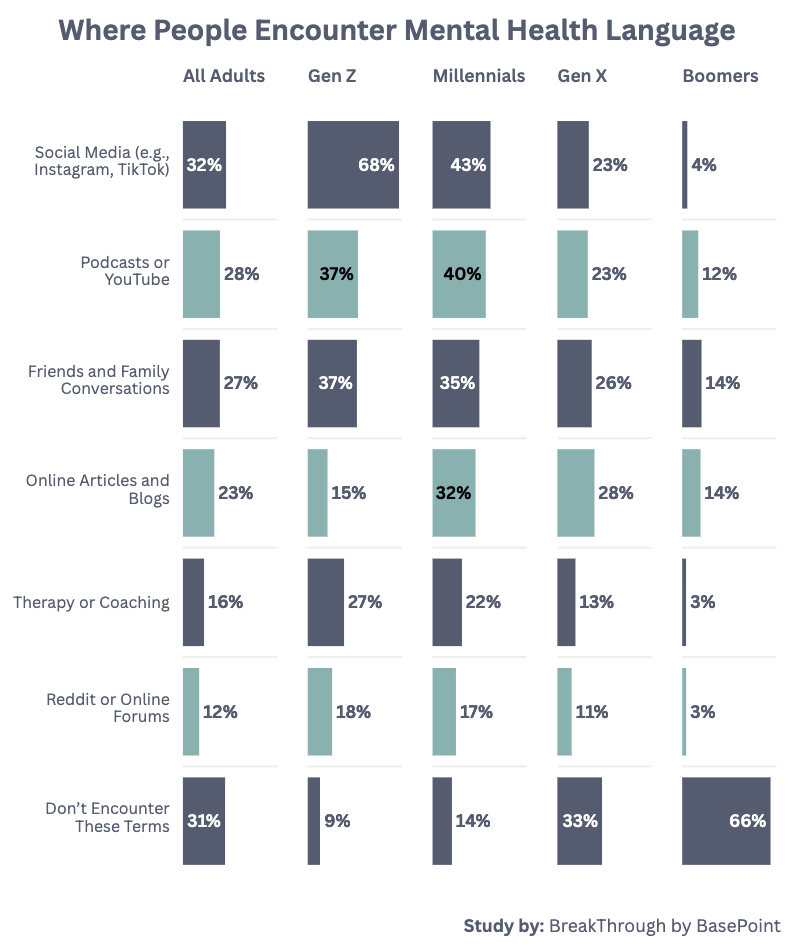
  • Nearly 1 in 3 (32%) encounter mental health language on social media, making it the top source of terminology. Gen Z (68%) and millennials (43%) encounter it the most often.
  • One in three have changed how they describe their emotions after online exposure to mental health terms or trends, increasing to 50% for millennials, and 55% among AI users.
  • More than 1 in 4 use “therapy speak” in conversations with their friends and family — seventy-three find it performative when online.
  • Cost is the most widespread barrier to care, keeping 53% of adults and 58% of millennials from seeking help, as many turn to friends (42%), social media (39%), and forums (33%) for support.
  • Roughly one in four (23%) now use AI chatbots for emotional support, led by Gen Z (44%), millennials (31%), and men (41%). Among users, 47% say it’s helped reframe their feelings, and 41% describe it as nonjudgmental.

How People Talk and Think About Mental Health

For years, mental health was a taboo topic. People were afraid to bring up concerns over their mental health due to fear of judgment and discrimination. However, more people are talking about mental health than ever before.

This shift isn’t limited to people who were already open about their mental health. Over 45% of the survey respondents said they feel more comfortable talking about mental health now than they did earlier in life. Over 50% of Americans use mental health language in their everyday conversations.

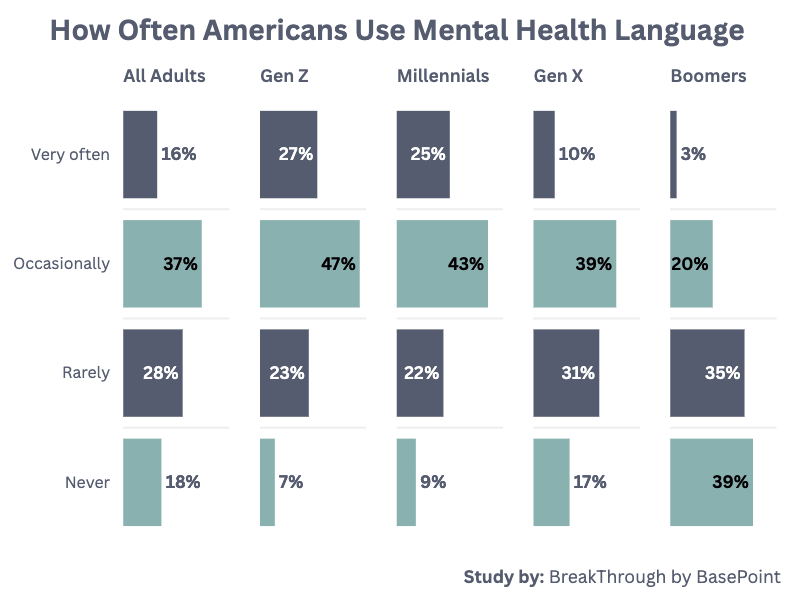
Graph showing how often each generation uses mental health related language

However, not all Americans talk about mental health and expose themselves to discussions about it, especially older adults. Only 23% of baby boomers say they regularly encounter and use mental health terminology. Meanwhile, 74% of Gen Z and 68% of millennials use the terminology regularly.

The survey also found mixed results in how this increased use of “therapy speak” impacted their everyday life. Of the survey respondents, 46% said talking about mental health improved how they expressed their emotions.

At the same time, not everyone feels positively about the rise of “therapy speak.” Nearly 1 in 5 adults said they avoid using this mental health terminology because it feels confusing or uncomfortable. Their responses suggest that while these conversations are becoming more common, a significant portion of Americans still finds the language inaccessible.

Where Americans Learn the Language of Mental Health

When people thought of what mental health traditionally looked and sounded like, some would think of a cartoon character sitting in a chaise lounge across from a Freudian therapist. However, mental health discussions are happening everywhere, both in the real world and online.

Mental health language across generations chart

According to the survey results, 32% of Americans encounter mental health terminology on Instagram or TikTok, making social platforms the top exposure point. Even among those who use AI platforms like ChatGPT, which has recently seen a spike in therapeutic prompts, social media apps reign supreme in therapy exposure — 49% of AI-chatbot users still encounter most therapy terms on social media.

In contrast, only 27% of the respondents said they heard these terms from friends or loved ones in person, and just 16% said they encountered them through a therapist or coach.

Despite the rise in online therapy speak, many users believe that most online content may actually be problematic. Up to 73% of respondents thought the mental health language they heard online was performative or inaccurate at least some of the time. To them, these kinds of discussions weren’t a liberating exchange to talk about their experiences, but rather an inauthentic expression that may actually hinder honest conversations.

How Americans Work Through Their Feelings With the Internet

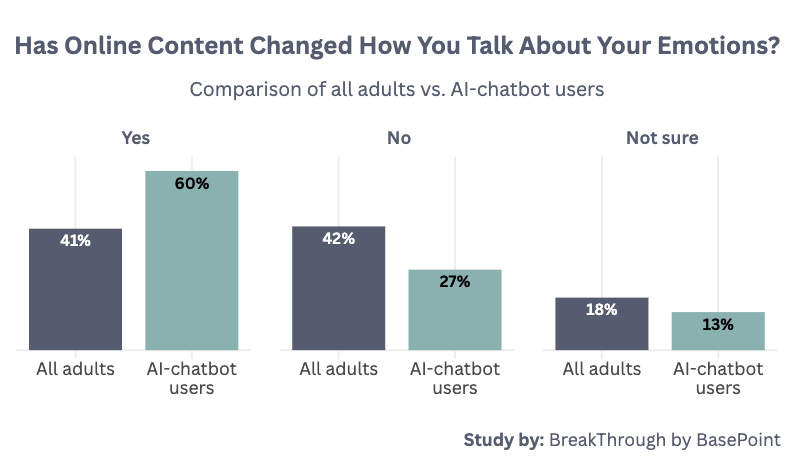
Many respondents didn’t just internalize therapy speak and keep it amongst themselves. Instead, for many, it reflected a fundamental change in their actions, particularly how they talk about it. For example, 41% changed the way they described an emotion or personal issue after encountering a similar term or trend online.

Survey results on emotional communication changes

This phenomenon is more pronounced in certain groups than others. For example, 60% of AI-chatbot users said that exposure to online therapy language influenced how they describe their emotions. There is also a clear generational divide: about 50% of millennials and 41% of Gen Z reported changing the way they talk about their emotional experiences after encountering therapy speak, compared with just 29% of baby boomers. These results suggest that younger generations are generally more open to discussing mental health, while older adults continue to face lingering stigmas.

Overall, only 38% reported that therapy speak made no difference in how they communicate. For a vast majority of survey respondents, therapy speak made a positive difference in their behavior, breaking down the stigma that has lasted generations.

Where People Go for Emotional Support When They’re Not Going to Therapy

Over any kind of treatment, psychotherapy is one of the most effective. According to the American Psychological Association, 75% people attending therapy find some kind of relief within six months. However, it isn’t the only kind of treatment people are searching for in this modern age.

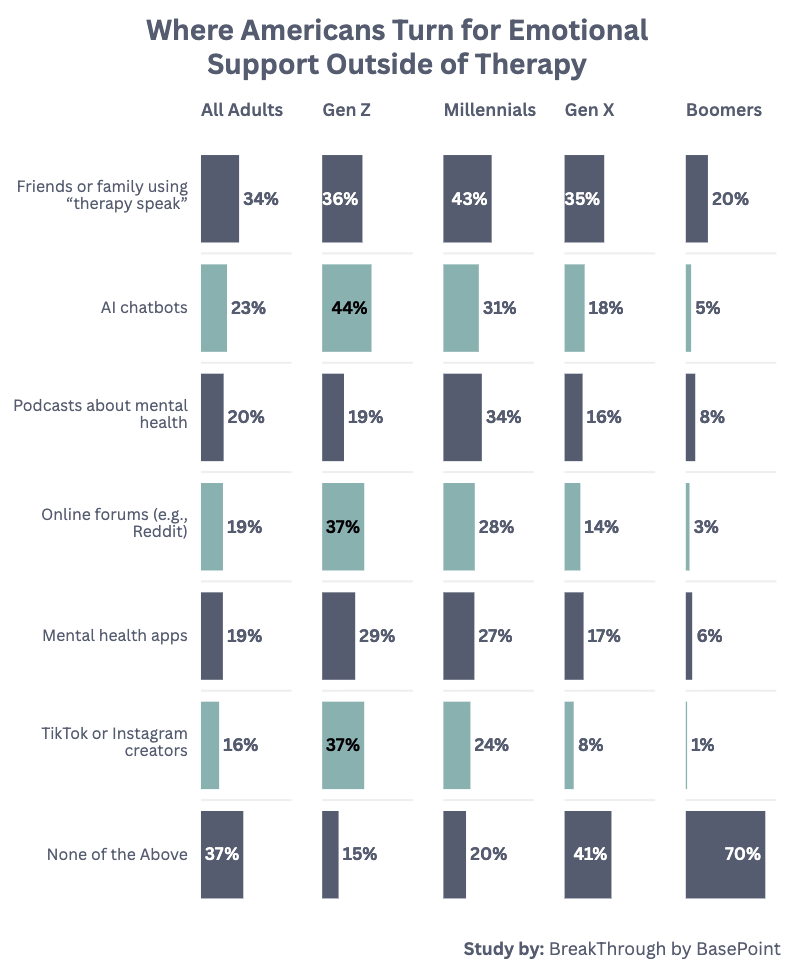
Grapg showing where Americans turn for emotional support outside of therapy

According to our survey, 63% of Americans seek alternatives for emotional support outside of therapy. At the top of the list of alternatives are friends and family who use “therapy speak” — 34% of Americans will turn to this source. Second on this list is AI chatbots. More than 1 in 5 will turn to an AI chatbot as a substitute for therapy. The other most common types of content were:

  • Podcasts (20% of Americans used in the past year)
  • Online forums (e.g., Reddit) (19% of Americans)
  • Mental health apps like Calm or Headspace (19% of Americans used in the past year).

Younger adults are the most likely to seek out online content for emotional support. For example, 44% of Gen Z turn to AI chatbots, and 34% of millennials use podcasts to help manage their emotions. In contrast, baby boomers rarely turn to digital options, with 5% or less using AI tools and just 6% using a mental health app.

At the same time, younger people aren’t rejecting traditional therapy. Only 15% of Gen Z avoid all non-therapist emotional support options, compared with 70% of baby boomers. In many cases, younger adults’ use of online resources reflects their broader comfort with and acceptance of mental health awareness, a perspective that older generations may be less accustomed to.

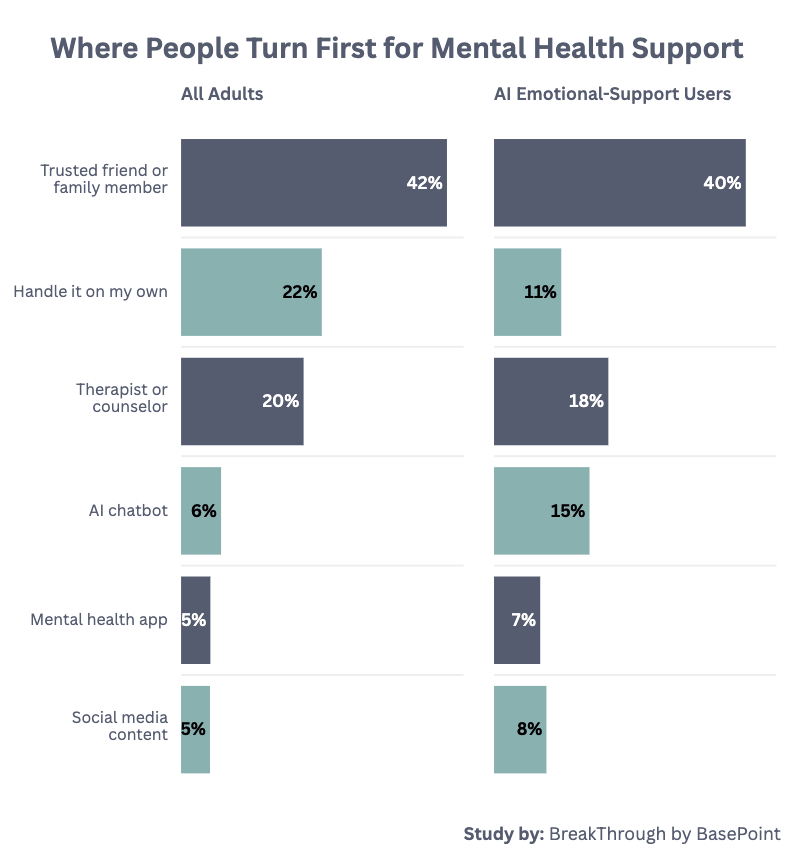
What Comes First: Therapy or AI?

It’s no secret that many Americans delay mental health treatment for a variety of reasons. For some, the main barrier is financial: nearly 11% of U.S. adults with a mental health condition had no insurance coverage in 2024, according to the National Alliance on Mental Illness (NAMI). For others, the problem is a lack of available providers. NAMI also reports that more than 120 million adults live in areas facing a shortage of mental health professionals, leaving many without access to the care they need.

Graph showing where people turn first for mental health support

What’s Getting in the Way of Seeking Therapy

Despite the effectiveness of therapy, some barriers stand in the way of seeking actual treatment. According to a Harvard Medical School report, nearly 60% of people with mental illnesses did not seek treatment. Our survey aimed to find out why exactly they aren’t receiving the care they need, even with the growing acceptance of mental health discussions.

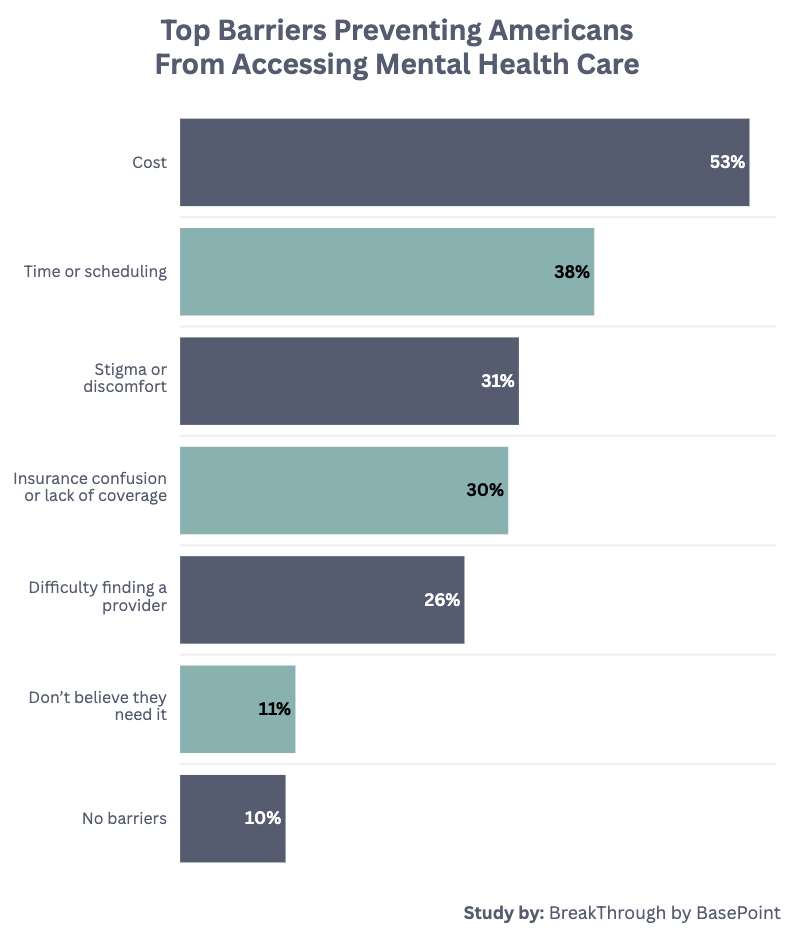
Most common barriers that are blocking people from mental health care

Cost was the most commonly cited barrier, with as many as 53% of respondents identifying it as the main obstacle. This was also a consistent finding among all age groups. Up to 58% of millennials and 48% of Gen Xers and baby boomers cited cost as a concern that prevented them from seeking mental health care.

Still, other barriers stood in the way, such as:

  • Limited time: Of the respondents, 38% cited lack of time or scheduling conflicts as a barrier.
  • Stigma: 31% of Americans felt uncomfortable, a symptom of stigma, which prevented them from receiving care.
  • Lack of insurance: 30% of Americans were either confused about their insurance coverage or had limited benefits that prevented them from receiving the proper care.
  • Provider shortages: Over a quarter of Americans (26%) experienced difficulty in finding an available provider, highlighting the provider shortage that exists in most of the U.S.

With all of the barriers that exist for many Americans, very few felt like they didn’t have to jump through hoops to receive the care they needed. Only 10% said they faced no barriers at all, suggesting obstacles are the norm, not the exception.

How Americans Navigate Their Emotions in a Fragmented System

If there’s one theme in these findings, it’s that Americans are redefining both the language and pathways of mental health support. Online platforms have become a major source of emotional guidance, and everyday conversations increasingly include terminology once reserved for clinical settings. This growing openness reflects meaningful progress in how mental health is discussed and understood.

But behind this cultural shift sits a more practical reality: many people simply cannot access professional care. Cost of mental health care remains the most significant obstacle, followed closely by lack of insurance, limited time, and major provider shortages. These gaps explain why the first stop for most adults isn’t a therapist. It’s a trusted friend, a personal coping strategy, or increasingly, a digital resource such as a podcast or an AI chatbot.

As mental health conversations continue to move beyond the therapist’s office, the challenge of safe and effective treatment remains. People still go without the care they need to process their emotions in a professional setting. However, if anything, this data calls awareness to the opportunities that lie in front of us.

If we bolster the resources and tools that people are already using for their mental health care, such as providing more digital options or posting more factual information online, we can meet people where they are. The future of mental health care isn’t barred off. If anything, the next chapter can be more accessible, more human, and more responsive to the realities Americans face every day.

Methodology

The study used a survey of 1,000 U.S. adults to understand the attitudes, behaviors, and actions around mental health treatment. We then stratified the data and segmented it based on age and gender.

About BasePoint BreakThrough

BasePoint BreakThrough provides outpatient behavioral services for young people, treating a wide range of mental health challenges. They are on the leading edge of providing innovative therapeutic techniques, including Cognitive Behavioral Therapy (CBT), Dialectical Behavioral Therapy (DBT), individual therapy, group therapy, and family psychoeducation.

Fair Use Statement

If you wish to use the information in this article, you may do so for non-commercial purposes only, and attribute with a link back to BasePoint BreakThrough.

A man and woman sitting opposite each other, in a professional building. The woman is writing on a notepad while the man talks and gestures with his hand.

How To Find the Right Therapist for You: A Guide for Underserved Communities

A man and woman sitting opposite each other, in a professional building. The woman is writing on a notepad while the man talks and gestures with his hand.

How To Find the Right Therapist for You: A Guide for Underserved Communities

Millions of Americans who need mental health care struggle to find it—especially those in underserved communities. In 2019, an estimated 21.6 million adults reported moderate to severe symptoms of anxiety or depression, but 39% of them did not receive any treatment, primarily due to cost or lack of access. Among those with no insurance, nearly 92% with severe symptoms went untreated.

For people in BIPOC, LGBTQ+, low-income, rural, or disabled communities, these gaps are even wider. Many face additional hurdles like discrimination, stigma, language barriers, and a lack of culturally competent providers. Even when care is available, it isn’t always inclusive or affirming.

This guide is here to help you navigate those challenges, whether you’re searching for your first therapist or looking to switch to someone who truly understands your identity and needs. Inclusive, accessible mental health care is essential for everyone.

Why Inclusive Therapy Matters for Underserved Communities

Underserved communities encounter disproportionate barriers to mental health care. These groups are more likely to experience chronic stressors tied to discrimination, financial instability, and geographic isolation, yet they have fewer options for quality treatment. Common barriers include:

  • Provider shortages in rural or low-income areas
  • Lack of insurance or comprehensive coverage that limits access to care
  • Language barriers and a lack of multilingual providers
  • Cultural mistrust due to historical mistreatment by the healthcare system
  • Few clinicians have the cultural competence to treat diverse populations effectively

These access issues aren’t hypothetical. According to the KFF Survey on Racism, Discrimination, and Health, 38% of Black adults and 36% of Hispanic adults said they had difficulty finding providers who respect their cultural background. These groups also report higher levels of unfair treatment and lower levels of trust in healthcare settings. Meanwhile, research from UC Davis shows that poverty-linked stress — from housing insecurity to adverse childhood experiences — leaves a lasting mental health burden that is often left untreated.

Inclusive therapy emphasizes a client’s lived experience and cultural identity. Culturally competent mental health care often includes:

  • Using affirming, non-stigmatizing language
  • Recognizing and validating systemic and intergenerational trauma
  • Adapting therapy models to reflect the client’s cultural background
  • Creating a safe space where clients don’t need to “explain” their identity

When therapy lacks inclusivity, clients may struggle to build trust or abandon treatment altogether. For underserved populations already navigating mental health inequities, a culturally unaware therapist can perpetuate the same harm within an incredibly vulnerable setting.

Common Barriers to Finding the Right Therapist

Finding a great therapist is easier said than done. Multiple factors can prevent someone from getting the help they need; here are the most common:

Financial Hurdles and Insurance Issues

For many people, the cost of therapy is the first and most persistent barrier. Mental health care remains out of reach for individuals without insurance or for those whose insurance doesn’t adequately cover therapy. Common financial obstacles include:

  • Lack of insurance coverage for mental health or behavioral services, particularly among low-income or self-employed individuals
  • High out-of-pocket costs, including steep co-pays, deductibles, or session caps that limit the number of visits per year
  • A limited number of in-network therapists, which can mean long waitlists or settling for a provider who isn’t a good fit

Even when mental health services are technically covered, many insurance networks include only a small pool of providers, some of whom may not be accepting new patients. Navigating the insurance system itself — understanding benefits, verifying coverage, submitting claims — can also become a deterrent, particularly for those in crisis.

Cultural Disconnect and Stigma

When therapists and clients come from different backgrounds, it can lead to misunderstandings, distrust, or treatment that doesn’t fit the client’s experiences. For people from groups that have been unfairly treated or discriminated against, the shame associated with mental health issues is often made worse by bigger problems in society. The most common challenges include:

  • Mistrust of mental health professionals, especially among BIPOC and immigrant communities with histories of institutional racism or cultural invalidation in clinical settings
  • Language barriers that prevent full participation in therapy, particularly when bilingual or culturally fluent therapists are unavailable
  • Cultural stigma that equates mental health issues with weakness, family dishonor, or spiritual failure

As the American Psychiatric Association notes, stigma not only reduces help-seeking behaviors but can also affect the quality of care a person receives. For many, fear of judgment, either from their community or from a provider who doesn’t understand their background, becomes a reason to avoid therapy altogether.

LGBTQ+ Discrimination or Erasure

The therapist-client relationship requires trust, and for queer, trans, and nonbinary individuals, providers may break this trust if they fail to affirm their client’s identity. Barriers specific to LGBTQ+ populations include:

Inadequate or uninformed care can do more harm than good, particularly for individuals already facing depression, anxiety, or suicidal ideation linked to social exclusion.

Rural and Remote Area Challenges

Geography can be one of the most rigid barriers to therapy. In rural or remote communities, mental health care is often scarce, and logistical constraints make consistent care difficult. Common issues include:

  • Severe shortages of licensed mental health professionals, especially those with expertise in trauma, substance use, or marginalized identities
  • Long travel distances to the nearest available therapist, compounded by a lack of public transportation or inflexible work schedules
  • Limited or unreliable broadband access, which restricts the use of telehealth and virtual therapy options

Even when someone in a rural area is highly motivated to seek care, the lack of available or accessible providers can mean months-long waits or complete abandonment of treatment efforts. This deepens existing disparities and contributes to the isolation and chronic stress already common in rural life.

Top-angle shot over the shoulder of a woman sitting and taking notes on a clipboard while a man sits across from her.

Where to Start Your Search

Finding the right therapist starts with understanding what resources are already available to you. If you have health insurance, review your mental health benefits first. Many plans cover therapy services, but may have restrictions on which providers you can see or how many sessions are included. To better understand your options, it’s helpful to consult your insurance provider’s mental health coverage details and confirm what services are covered, whether telehealth is included, and which therapists are in-network.

For individuals with low income or no private insurance, Medicaid plays a vital role in expanding access. Medicaid is the largest payer of behavioral health services in the U.S., and many providers across the country accept it. This includes community health centers, private practices, and nonprofit organizations that are working to reach underserved populations with affordable mental health care.

Free and Low-Cost Therapy Options

Several resources connect you to affordable or no-cost care options:

  • Federally Qualified Health Centers (FQHCs) offer mental health services on a sliding scale based on income
  • Religious or spiritual support networks, with a focus on providers who offer affirming, culturally sensitive care
  • Group therapy and peer-led support groups that address shared experiences like grief, addiction, or trauma
  • School-based or workplace mental health programs, which may offer on-site counselors or virtual therapy
  • Local nonprofits and advocacy organizations that provide direct services or financial assistance for therapy
  • University counseling centers and training clinics, where graduate students provide supervised, low-cost care
  • LGBTQ+ centers and BIPOC-specific therapy directories, which highlight culturally competent providers and affirming spaces

Starting with these resources can help ease the search process while ensuring your care is both accessible and affordable.

No matter your coverage or income, it’s essential to research potential therapists before scheduling your first session. A provider’s website or directory profile can reveal important details about their specialties, approach, and whether they prioritize inclusive, trauma-informed care. Visiting platforms like BasePoint’s provider network can help you evaluate whether a therapist is a good match for your cultural background, identity, or specific mental health needs.

How To Tell If a Therapist Is a Good Fit

Sometimes, you have to “shop” for the right therapist. But when therapy is new to you, finding the right kind of care can be a bit of a puzzle. Here’s how to put the pieces together:

Evaluating Cultural Competence and Inclusivity

A good therapeutic relationship is built on trust, safety, and mutual respect. For clients from underserved or marginalized communities, this includes assessing whether a therapist practices cultural humility — an ongoing commitment to learning about and honoring the lived experiences, values, and identities of others.

In practice, cultural humility looks like

  • Acknowledging power dynamics between therapist and client
  • Asking thoughtful, open-ended questions without making assumptions
  • Demonstrating a willingness to learn about your background and culture
  • Reflecting on their own biases and actively working to challenge them

For LGBTQ+ clients, safety and affirmation are especially critical. Therapists who are affirming typically:

  • Use your correct name and pronouns without hesitation
  • Avoid heteronormative or cisnormative assumptions
  • Understand the impact of minority stress and systemic discrimination
  • Create a judgment-free space to explore identity, relationships, and trauma
  • Are listed as an LGBTQ+-friendly provider or visibly state their commitment to inclusivity on their website or intake forms

If a provider seems dismissive, it may be a sign to continue your search.

First Consultation Questions

The first session or consultation is your opportunity to get a feel for a therapist’s style and values. Don’t hesitate to ask direct questions that help you determine if they’re the right fit for your needs. Consider asking:

  • How do you approach topics like trauma, gender identity, race, or cultural background?
  • What kind of therapeutic modalities or techniques do you typically use?
  • Do you offer sliding scale rates or virtual sessions to make care more accessible?
  • What experience do you have working with clients who share similar identities to mine?

A therapist who is a good fit will respond without defensiveness, welcome your questions, and view the conversation as part of establishing trust.

The Therapeutic Alliance

The therapeutic alliance refers to the collaborative, trusting relationship between you and your therapist — and research shows it’s one of the strongest predictors of positive outcomes in therapy. A strong alliance blends mutual respect, agreement on therapy goals, and a sense that you’re working together as a team. When the alliance is strong, clients are more likely to feel understood, stay engaged, and experience meaningful progress.

Signs of a healthy therapeutic alliance include:

  • Feeling heard, validated, and respected
  • Agreeing on goals and the steps needed to reach them
  • Experiencing open, honest communication without judgment
  • Sensing that your therapist is genuinely invested in your growth

If you consistently feel disconnected, misunderstood, or reluctant to share, it may be worth addressing the issue directly with your therapist — or considering whether a different provider might be a better fit.

How To Advocate for Your Mental Health During Counseling Sessions

Therapy should be a safe space where you feel respected, heard, and supported. If it’s not, you have every right to speak up or leave. You never have to stay with a therapist who isn’t a good fit. If you decide to move on, simply tell them you’re exploring other options or your needs have changed. You don’t need to explain further.

It’s just as important to speak up for yourself during sessions. If a therapist says something that feels wrong or invalidating, it’s okay to pause and say something. Saying, “That didn’t sit right with me,” or “Can we talk about what you meant by that?” can help clear up miscommunications, or it might confirm that you need to find someone else.

Clearly define expectations from the start by discussing feedback, boundaries, and therapy goals. Therapy is for you, and actively expressing your needs and values is vital to your healing journey.

mental health evaluation with female therapist

Finding the right therapist isn’t always easy. But inclusive, affirming care is out there, and you deserve it. Whether you’re navigating systemic challenges or simply looking for someone who truly understands you, knowing how to ask the right questions and advocate for yourself leads to better, more effective care. Prioritizing your mental health means finding support that empowers you — that process starts with trusting yourself.

Counseling Resources for Underserved Communities

Access to quality mental health care can be especially limited for underserved populations. The following resources can meet the needs of historically marginalized communities.

Resources for BIPOC Communities

These resources increase access to therapists of color and promote culturally informed care:

These directories and networks are valuable tools for finding therapists who understand and reflect the lived experiences of BIPOC individuals.

Resources for LGBTQ+ Communities

For LGBTQ+ individuals, affirming mental health care can make a world of difference. The following organizations provide specialized services tailored to LGBTQ+ needs:

These services are crucial in fostering safe spaces for healing and empowerment within LGBTQ+ communities.

Resources for Rural and Remote Residents

Living in a rural or remote area shouldn’t mean going without mental health support. These services are committed to closing the access gap with affordability and telehealth options:

Whether you’re looking for virtual therapy or nearby services, these resources make care more reachable for remote residents.

Resources for People with Disabilities

Finding accessible, inclusive therapy can be a challenge for individuals with disabilities. The following organizations remove barriers and offer tailored support:

These tools help ensure that mental health care is accessible and affirming for people with disabilities.